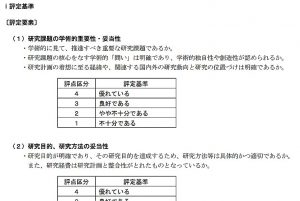
科研費に採択されるための最良の方法は,「書き上げた申請書を誰かに見せて添削してもらうこと」だと思う.見てもらう人が採択経験豊富な人ならなおよい.そういった人に申請書を見てもらって何度も何度も直すのが一番よい方法だ.(小噺その10:科研費に採択されるための最良の方法 Smart Lab Life 羊土社)
“.. Yoshiki struck me as a happy scientist. He spoke softly and with a unique smile as he described Japanese traditions or revealed his astonishing findings. .. Sasai was a master at deciphering the code by which cells learn their place in a developing embryo. ..Yoshiki Sasai (1962–2014):Stem-cell biologist who decoded signals in embryos. Arturo Alvarez-Buylla. Nature 513,34 (04 September 2014) doi:10.1038/513034a
“.. Yoshiki had an unmatched ability to decipher the embryo—specifically, to uncover how this developmental marvel generates the extraordinary diversity of cell types that become organized into unique structures, like the pituitary gland, the brain, or the eye. .. “Obituary Yoshiki Sasai (1962–2014). Arnold R. Kriegsteinemail DOI: http://dx.doi.org/10.1016/j.stem.2014.08.007 Cell Stem Cell Volume 15, Issue 3, p265–266, 4 September 2014
“.. Yoshiki had a unique ability to see things clearly while others were left wandering in the dark. .. “OBITUARY Yoshiki Sasai: stem cell Sensei
Stefano Piccolo Development (2014) 141, 1-2 doi:10.1242/dev.116509
サイエンス 2006年6月2日第312巻5778号 (目次)
Fujiwara et al., The Rubble-Pile Asteroid Itokawa as Observed by Hayabusa.Science 2 June 2006: 1330-1334.
Abe et al., Near-Infrared Spectral Results of Asteroid Itokawa from the Hayabusa Spacecraft.Science 2 June 2006: 1334-1338.
Okada et al., X-ray Fluorescence Spectrometry of Asteroid Itokawa by Hayabusa.Science 2 June 2006: 1338-1341.
Saito et al., Detailed Images of Asteroid 25143 Itokawa from Hayabusa.Science 2 June 2006: 1341-1344.
Abe et al., Mass and Local Topography Measurements of Itokawa by Hayabusa.Science 2 June 2006: 1344-1347.
Demura et al., Pole and Global Shape of 25143 Itokawa.Science 2 June 2006: 1347-1349.
Yano et al., Touchdown of the Hayabusa Spacecraft at the Muses Sea on Itokawa.Science 2 June 2006: 1350-1353.
ところが、はやぶさが取得した蛍光X線データに基づいて小惑星「イトカワ」の元素組成を解析した論文(Okada et al., 2006)に誤りがあったとして、宇宙航空研究開発機構(JAXA)は、掲載誌サイエンスに論文撤回を申し入れました。
2006年にこの著者らが蛍光X線分光データ分析により検証しようとした仮説は、後に探査機「はやぶさ」が持ち帰ったサンプルを実際に分析することにより検証され、その結果は2011年にサイエンス誌に発表された6本の論文の一つ(Nakamura et al., 2011)で報告されました。
サイエンス 2011年8月26日 第333巻6046号 (目次)(成果を解説するポッドキャスト)
Nakamura et al., Itokawa Dust Particles: A Direct Link Between S-Type Asteroids and Ordinary Chondrites. Science 26 August 2011: 1113-1116.
Yurimoto et al., Oxygen Isotopic Compositions of Asteroidal Materials Returned from Itokawa by the Hayabusa Mission. Science 26 August 2011: 1116-1119.
Ebihara et al., Neutron Activation Analysis of a Particle Returned from Asteroid Itokawa. Science 26 August 2011: 1119-1121.
Noguchi et al., Incipient Space Weathering Observed on the Surface of Itokawa Dust Particles.Science26 August 2011: 1121-1125.
Tsuchiyama et al., Three-Dimensional Structure of Hayabusa Samples: Origin and Evolution of Itokawa Regolith.Science 26 August 2011: 1125-1128.
Nagao et al., Irradiation History of Itokawa Regolith Material Deduced from Noble Gases in the Hayabusa Samples.Science 26 August 2011: 1128-1131.
はやぶさXRSに係る論文撤回の申し入れについて:” 当機構 宇宙科学研究所に所属する研究者が主著者となって投稿し、平成18年6月2日のサイエンス誌に掲載された論文「X-ray Fluorescence Spectrometry of Asteroid Itokawa by Hayabusa」について、本日、主著者らがサイエンス誌編集部に論文の撤回を申し入れましたのでお知らせいたします。なお、当該論文は、「はやぶさ」 に関連して発表された査読付き論文129件(うちサイエンス誌には14件掲載)の内の1件です。..” (JAXA 宇宙高校研究開発機構 平成26年8 月29日)
“Hello Kitty, the white cat with a pink bow on her ear, is the ultimate embodiment of Japan’s cute culture: She has no background and no mouth.” (From Anne Frank to Hello Kitty.(Norihiro Kato, The New York Times March 12, 2014. )
“The celebrity cat adorns everything from diamond-studded jewellery, Fender guitars and digital cameras to lunch boxes, T-shirts and stationery.” (AL Jazeera 08 Aug 2007)
ハローキティーの公式プロフィール:“Hello Kitty is a cheerful and happy little girl with a heart of gold. She lives in London with her mama (Mary White), papa (George White), and her twin sister Mimmy. Hello Kitty loves to bake and she can make really delicious cookies. She learned her baking talents from her mama, who makes scrumptious apple pies that are enjoyed by the whole family.”
Pink Globalization: Hello Kitty’s Trek across the Pacific: “In Pink Globalization, Christine R. Yano examines the creation and rise of Hello Kitty as a part of Japanese Cute-Cool culture. Yano argues that the international popularity of Hello Kitty is one aspect of what she calls pink globalization—the spread of goods and images labeled cute (kawaii) from Japan to other parts of the industrial world.” (アマゾン)
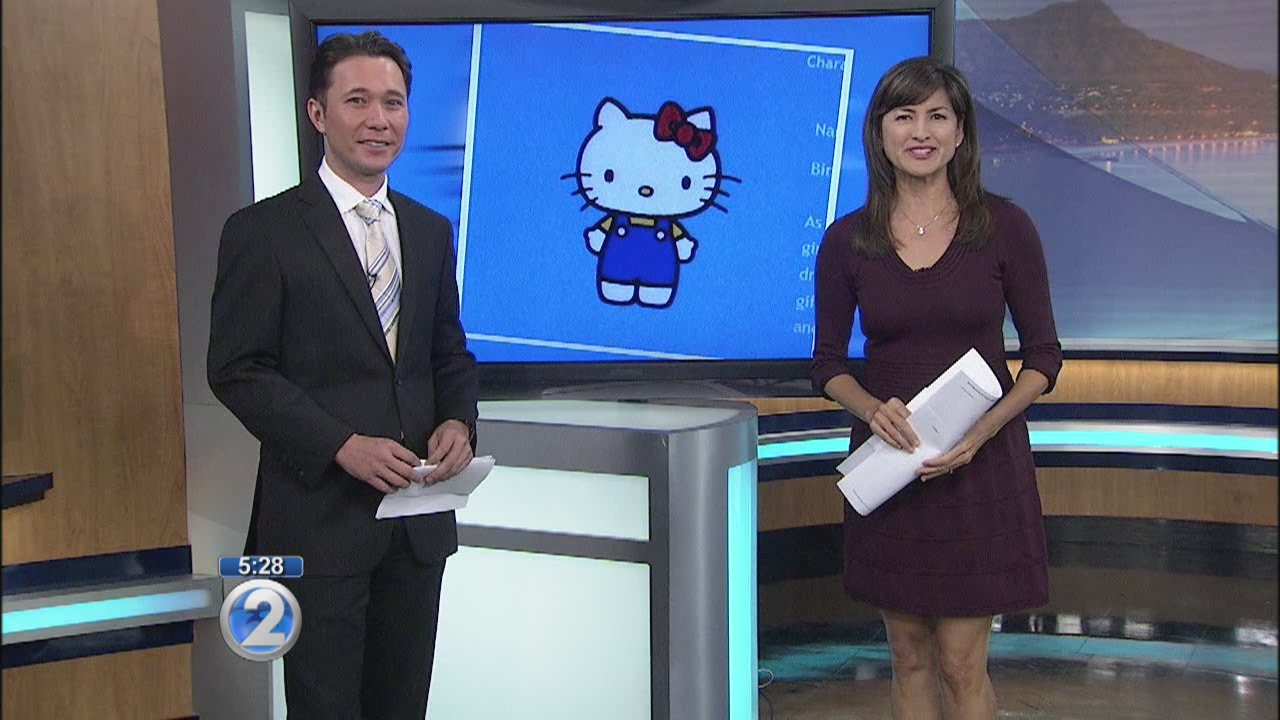
Christine Yano, PhD. Professor Department of Anthropology, University of Hawaii at Manoa
Ebola kills Liberia doctor despite ZMapp treatment (BBC 25 August 2014):”..It is not clear whether T-705 (or Avigan) will actually work against Ebola, and no monkey or human trials of the drug have been done, the BBC’s Rupert Wingfield-Hayes in Tokyo reports. ..”
Family of British Ebola sufferer says he is in ‘best possible place’(RTE News Monday 25 August 2014):”Tokyo stands ready to offer an experimental drug developed by a Japanese company to help stem the global tide of the deadly Ebola virus, the top government spokesman has said…”
Ethical considerations for use of unregistered interventions for Ebola virus disease Report of an advisory panel to WHO :世界保健機関(WHO)が実験段階の未承認治療薬の使用を認める見解を発表した報告書”Conclusion In the particular context of the current Ebola outbreak in West Africa, it is ethically acceptable to offer unproven interventions that have shown promising results in the laboratory and in animal models but have not yet been evaluated for safety and efficacy in humans as potential treatment or prevention. … “
Ebola therapy hopes shift to small California biotech (Reuters Tue Aug 5, 2014 GMT):”Hopes of finding a treatment for the deadly Ebola virus shifted on Monday to a small California-based biotech company whose experimental drug has been used to treat two American missionary workers. …”
Five things to know about the ZMapp Ebola drug (Fortune.com August 5, 2014, 10:45 AM EDT): “In the wake of an Ebola outbreak in West Africa that has resulted in nearly 900 deaths, a tiny pharmaceutical maker has allowed an experimental treatment to be used for two Americans infected with the deadly virus. ..”
Ebola drug ZMapp tested in Europe, on Spanish priest infected in Liberia (The Washington Times – Sunday, August 10, 2014): “The 75-year-old Spanish priest who became the first patient evacuated to Europe with the deadly Ebola virus now will become the first European to be treated with the experimental drug ZMapp. ..”
Beluga Whale Named Noc Mimics Human Noises With Spot-On Imitation (AUDIO) Huffpost 10/23/2012):”..In 1984, scientists at the National Marine Mammal Foundation in San Diego began noticing unusual noises emanating from where they kept the whales and dolphins. These resembled two people conversing in the distance, just beyond the range of the understanding of listeners…”
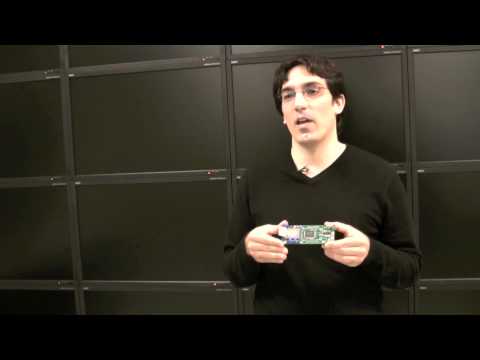
サイエンス論文の筆頭著者の二人が、新しいコンピュータチップ開発の動機を解説している動画。
SyNAPSE: IBM Cognitive Computing Project – Hardware
A Cognitive Information Superhighway
”IBM’s brain-inspired architecture consists of a network of neurosynaptic cores. Cores are distributed and operate in parallel. Cores operate—without a clock—in an event-driven fashion. Cores integrate memory, computation, and communication. Individual cores can fail and yet, like the brain, the architecture can still function. Cores on the same chip communicate with one another via an on-chip event-driven network. Chips communicate via an inter-chip interface leading to seamless scalability like the cortex, enabling creation of scalable neuromorphic systems.”(http://www.research.ibm.com/cognitive-computing/neurosynaptic-chips.shtml#fbid=15Zz4zjXf0H)
Bringing Computing to the Data
”A video camera on Hoover Tower at Stanford University is looking down at the plaza, below. A simulated network of IBM TrueNorth chips takes in the video data and locates interesting objects. Objects might look interesting to the system because they are moving or have a different color or texture than the background. The system then further processes those portions of the interesting video to determine what the objects are. It is trained in several specific categories, such as buses, cars, people, and cyclists. In a monitoring application, the camera would only need to communicate when it found an interesting object, rather than continually streaming video to a central location.”(http://www.research.ibm.com/cognitive-computing/neurosynaptic-chips.shtml#fbid=15Zz4zjXf0H)
DARPA SyNAPSE Program (artificialbrains.com Jan 11, 2013):” SyNAPSE is a DARPA-funded program to develop electronic neuromorphic machine technology that scales to biological levels. More simply stated, it is an attempt to build a new kind of computer with similar form and function to the mammalian brain. Such artificial brains would be used to build robots whose intelligence matches that of mice and cats. SyNAPSE is a backronym standing for Systems of Neuromorphic Adaptive Plastic Scalable Electronics. It started in 2008 and as of January 2013 has received $102.6 million in funding. It is scheduled to run until around 2016. The project is primarily contracted to IBM and HRL who in turn subcontract parts of the research to various US universities. ..”
ウクライナ東部でミサイルにより撃墜された旅客機(マレーシア航空MH17便)にはオーストラリアのメルボルンで開催される第20回国際エイズ会議(International AIDS Conference, 7/20-24)に出席する予定の研究者や活動家が多数搭乗していました。
Hundred renowned experts on board MH17
100-Plus HIV/AIDS Researchers On MH17: ‘Devastating Impact’
The seeker after the truth is not one who studies the writings of the ancients and, following his natural disposition, puts his trust in them, but rather the one who suspects his faith in them and questions what he gathers from them, the one who submits to argument and demonstration, and not to the sayings of a human being whose nature is fraught with all kinds of imperfection and deficiency. Thus the duty of the man who investigates the writings of scientists, if learning the truth is his goal, is to make himself an enemy of all that he reads, and, applying his mind to the core and margins of its content, attack it from every side. He should also suspect himself as he performs his critical examination of it, so that he may avoid falling into either prejudice or leniency.(イブン・アル=ハイサム, 965-1040.https://en.wikiquote.org/wiki/Alhazen)
NIH mulls rules for validating key results (31 July 2013):”…In a 2011 internal survey, pharmaceutical firm Bayer HealthCare of Leverkusen, Germany, was unable to validate the relevant preclinical research for almost two-thirds of 67 in-house projects. Then, in 2012, scientists at Amgen, a drug company based in Thousand Oaks, California, reported their failure to replicate 89% of the findings from 53 landmark cancer papers….
In science, the integrity of data is the foundation for credible findings. I am deeply saddened by all that has transpired, and after thoughtful consideration of the errors presented in the RIKEN report and other concerns that have been raised, I have agreed to retract the papers. Although there has been no information that cast doubt on the existence of the stimulus-triggered acquisition of pluripotency (STAP) cell phenomenon itself, I am concerned that the multiple errors that have been identified impair the credibility of the manuscript as a whole. I am encouraged by recent news which suggests that Minister Hakubun Shimomura and RIKEN President Ryoji Noyori will allow sufficient time to replicate the core STAP cell concept that my brother Martin and I originally hypothesized, and trust that it will be verified by the RIKEN as well as independently by others.
Retraction: Stimulus-triggered fate conversion of somatic cells into pluripotency
Haruko Obokata,
Teruhiko Wakayama,
Yoshiki Sasai,
Koji Kojima,
Martin P. Vacanti,
Hitoshi Niwa,
Masayuki Yamato
& Charles A. Vacanti
Nature
511,
112
(03 July 2014)
doi:10.1038/nature13598
Published online
02 July 2014
Several critical errors have been found in our Article and Letter (http://dx.doi.org/10.1038/nature12969), which led to an in-depth investigation by the RIKEN Institute. The RIKEN investigation committee has categorized some of the errors as misconduct (see Supplementary Data 1 and Supplementary Data 2). Additional errors identified by the authors that are not discussed in RIKEN’s report are listed below.
(1) Figure 1a and b in the Letter both show embryos generated from STAP cells, not a comparison of ES- and STAP-derived chimaeric embryos, as indicated in the legend.
(2) Extended Data Fig. 7d in the Article and Extended Data Fig. 1a in the Letter are different images of the same embryo and not, as indicated in the legends, a diploid chimaera embryo and tetraploid chimaera embryo.
(3) There is an erroneous description in Fig. 1a in the Letter. The right panel of Fig. 1a is not a ‘long exposure’ image at the camera level but a digitally enhanced one.
(4) In Fig. 4b of the Letter, STAP cell and ES cell are wrongly labelled in a reverse manner.
(5) In the Article, one group of STAP stem cells (STAP-SCs) was reported as being derived from STAP cells induced from spleens of F1 hybrids from the cross of mouse lines carrying identical cag-gfp insertions in chromosome 18 in the background of 129/Sv and B6, respectively, and that they were maintained in the Wakayama laboratory. However, further analysis of the eight STAP-SC lines indicates that, while sharing the same 129×B6 F1 genetic background, they have a different GFP insertion site. Furthermore, while the mice used for STAP cell induction are homozygous for the GFP transgene, the STAP-SCs are heterozygous. The GFP transgene insertion site matches that of the mice and ES cells kept in the Wakayama laboratory. Thus, there are inexplicable discrepancies in genetic background and transgene insertion sites between the donor mice and the reported STAP-SCs.
We apologize for the mistakes included in the Article and Letter. These multiple errors impair the credibility of the study as a whole and we are unable to say without doubt whether the STAP-SC phenomenon is real. Ongoing studies are investigating this phenomenon afresh, but given the extensive nature of the errors currently found, we consider it appropriate to retract both papers.
ダンゴムシの意思決定 Decision-making in pill bugs The 27th Annual Conference of the Japanese Society for Artificial Intelligence, 2013 (PDF link):ダンゴムシの交替性転向反応は,BALM 以外にも走触性(Hughes, 1989)や記憶(Kupfermann, 1966)など,複数の機構が並列的に作用して実現されている可能性が高く(右田・森山, 2005),これらを統合して転向方向を選択する意思決定機構の存在が予想される.著者らは,ダンゴムシ個体にT字路を連続して遭遇させた実験(Moriyama, 1999)でしばしば観察された,転向方向の変更(図1)は,ダンゴムシの意思決定が顕著に反映された現象なのではないかと考えている.転向方向の変更は,個体がT字路において転向した後,次のT字路へ達するまでに停止し,後進で直前のT字路へ引き返し,前回の転向とは逆の方向へ転向することで達成される(図1).後進を含むこの一連の行動はBLAMでは説明できないため,転向方向の変更は別の機構の働きによって現れると考えられる.
R. N. HUGHES. Mechanisms for turn alternation in woodlice (Poreellio Beaber): The role of bilaterally asymmetrical leg movements. Animal Learning & Behavior.1985, 13 (3), 253-260 (PDFリンク):Along with results of the other experiments, this result in particular supported an explanation for woodlouse alternation based on bilaterally asymmetrical leg movements (BALM)arising from the negotiation of forced turns. Such asymmetry is seen as biasing an animal to turn in the opposite direction to a preceding forced turn.
R. N. HUGHES. TURN ALTERNATION IN WOODLICE (PORCELLIO SCABER). Anim. Behav ., 1967, 15, 282-286 (PDFリンク):As the persistence of the tendency seems to depend on time, it might be rewarding to seek a neural controlling mechanism involving the establishment of a short-term memory trace somewhere in the central nervous system (as suggested by Kuferman, 1966), or else, at a more peripherallevel, greater inhibition of neural components of the limbs adjacent to the outer wall of a maze turn i.e. the limbs that have to `walk further’ .
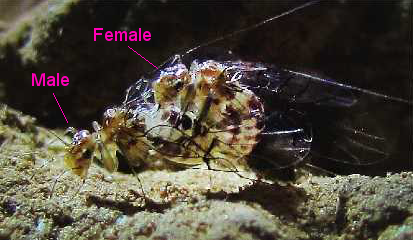
In sex-reversed cave insects, females have the penises (ScienceDaily April 17, 2014): “Although sex-role reversal has been identified in several different animals, Neotrogla is the only example in which the intromittent organ is also reversed,” says Kazunori Yoshizawa from Hokkaido University in Japan.
Lienhard, C., Do Carmo, T.O., and Ferreira, R.L. A new genus of Sensitibillini from Brazilian caves (Psocodea: ‘Psocoptera’: Prionoglarididae). Rev. Suisse Zool.. 2010; 117: 611–635
In weird Brazilian cave insects, male-female sex organs reversed (Reuters Thu Apr 17, 2014 12:09pm EDT): “Evolution of novelties like a female penis is exceptionally rare. That’s why I was really surprised to see the structure,” entomologist Kazunori Yoshizawa of Japan’s Hokkaido University said by email. Yoshizawa said that although sex-role reversal has been documented in several different types of animals, these insects are the sole example in which the “intromittent organ” – the male sex organ – is reversed, Yoshizawa said.