Subsets of data can be defined through gating. A gate is a numerical or graphical boundary used to isolate subpopulations of particles/cells in order to generate statistics on a limited number of events in a given sample. (Flow Cytometry – A Survey and the Basics Tom Rowley (tjrowley3 at gmail dot com) Columbia University, United States labome.com)
Flow cytometry gating strategy for T cells, B cells, eosinophils and dendritic cells. Whole lung cell tissues were stained for the T cell markers CD3, CD4, CD8; the B cell marker B220; dendritic cell marker CD11c, major histocompatibility complex class II (MHC II) marker, and the activation markers CD69 and CD86.
Multicolor flow cytometry – Understanding the basics [WEBINAR] FITC and PE (4:08~)
マルチカラーフローサイトメトリーで使われる色素
The fluorochromes used are: fluorescein (FITC), phycoerythrin (PE), Cy5PE and Cy7PE, excited at 488 nm by an argon laser; Texas Red (TR), allophycocyanin (APC), and Cy7APC excited at 595 nm by a pumped dye laser; and cascade blue (CB) and cascade yellow (CY) excited at 407 nm by a violet-enhanced krypton laser. (Cytometry. 1999 May 1;36(1):36-45. Nine color eleven parameter immunophenotyping using three laser flow cytometry. PubMed)
Fluorophores (Flow Cytometry at Einstein) When performing multicolor flow cytometric analysis, a major factor in the success of the analysis is the choice of which antibody to use with which fluorochrome. There are often many “correct” combinations possible.
Tandem dyes for flow cytometry
Tandem dyes comprise a small fluorophore covalently coupled to another fluorophore. When the first dye is excited and reaches its maximal excited electronic singlet state, its energy is transferred to the second dye (an acceptor molecule). This activates the second fluorophore, which then produces the fluorescence emission. The process is called Förster resonance energy transfer (FRET). (Which Fluorophores are Useful for Flow Cytometry? BIO-RAD)
Flow cytometry APC‐tandem dyes are degraded through a cell‐dependent mechanism Christine Le Roy Nadine Varin‐Blank Florence Ajchenbaum‐Cymbalista Rémi Letestu First published: 08 September 2009 https://doi.org/10.1002/cyto.a.20774
An end to end workflow for differential gene expression using Affymetrix microarrays
Bernd Klaus and Stefanie Reisenauer 14 September 2018 “walk through an end-to-end Affymetrix microarray differential expression workflow using Bioconductor packages.” “The data set used (1) is from a paper studying the differences in gene expression in inflamed and non-inflamed tissue. 14 patients suffering from Ulcerative colitis (UC) and 15 patients with Crohn’s disease (CD) were tested, and from each patient inflamed and non-inflamed colonic mucosa tissue was obtained via a biopsy. This is a typical clinical data set consisting of 58 arrays in total.”
ARRAYANALYSIS.ORG – ILLUMINA PRE-PROCESSING PIPELINE – DOCUMENT VERSION: 1.0.0 This guide will help you in the installation and/or use of the QC & pre-processing of Illumina arrays pipeline. All source code has been written in R and is open-source, available under the Apache License version
2.0. It is available on our Download page.
(Rで)マイクロアレイデータ解析 (u-tokyo.ac.jp last modified 2019/03/17, since 2005)
RNA-Seq and Microarrays Analyses Reveal Global Differential Transcriptomes of Mesorhizobium huakuii 7653R between Bacteroids and Free-Living Cells. PLoS One. 2014; 9(4): e93626.
Imaging receptors, ion channels and molecular motors in live cells using TIRF microscopy. (YOUTUBE 51:44) Recorded at NPL on 21 March 2013. National Physical Laboratory 2013/03/22 に公開 Justin Molloy from MRC National Institute for Medical Research.
Kinesin walking on Microtubules
GFP tagged Kinesin walking on TRITC labled microtubules. Composite image created from epiflorescence and TIRF microscopy.
Transport on microtubules – Sebastian Maurer
The transport of a fluorescently labelled cargo (cyan) by a kinesin motor protein towards microtubule plus ends is visualized here.
Harz & Hegemann 1991 Nature
Nagel et al., 2002
Nagel et al., 2003
Kato et al., 2012
Wieteck et al., 2014 Science with M. Elstner
Wietek et al., 2015 Scientific Rep (collaboration)
In conversation with Prof. Peter Hegemann. Institute of Molecular Cell & Systems Biology UofG YOUTUBE(音声のみ 44:54)2018/02/23 に公開 He spoke with us about how to be persistent in your research, and how to play the long game of building a career through the highs and lows of the scientific process. 研究生活、論文出版の悲喜こもごも、ホンネが語られていて興味深い。
カール・ダイセロス博士
カール・ダイセロス博士によるオプトジェネティクス概論
Karl Deisseroth (Stanford / HHMI): Development of Optogenetics
エド・ボイデン博士
エド・ボイデン博士(CV)によるオプトジェネティクスの概論
Ed Boyden on Optogenetics — selective brain stimulation with light
Han and Boyden 2007 PLoS ONE 2(3):e299
Chow, Han, et al., 2010. Nature 463:98-102
オプトジェネティクス研究の歴史 開発者によるレビュー論文
A history of optogenetics: the development of tools for controlling brain circuits with light Edward S. Boyden F1000 Biol Rep. 2011; 3: 11. Published online 2011 May 3
There’s only one problem with this story: It just may be that Zhuo-Hua Pan invented optogenetics first. Even many neuroscientists have never heard of Pan. Pan, 60, is a vision scientist at Wayne State University in Detroit who began his research career in his home country of China. (He may have invented one of neuroscience’s biggest advances. But you’ve never heard of him By ANNA VLASITS SEPTEMBER 1, 2016 STATNEWS)
Pan presented his work at a conference in 2005, a few months before Boyden and Deisseroth published their paper. But Pan struggled to get his work published in a journal until a year later. (The History of Optogenetics Revised Credit for the neuroscience technique has largely overlooked the researcher who first demonstrated the method. Sep 1, 2016 KERRY GRENS, TheScientist)
Ectopic expression of a microbial-type rhodopsin restores visual responses in mice with photoreceptor degeneration. Bi A, Cui J, Ma YP, Olshevskaya E, Pu M, Dizhoor AM, Pan ZH. Department of Anatomy and Cell Biology, Wayne State University School of Medicine, Detroit, Michigan 48201, USA. Neuron. 2006 Apr 6;50(1):23-33.
Optogenetics: Applications in psychiatric research Fukutoshi Shirai MSc Akiko Hayashi‐Takagi MD, PhD PCN Frontier Review First published: 24 February 2017
参考
Optogenetics (ENCYCLOPAEDIA BRITANNICA WRITTEN BY: Karl Deisseroth LAST UPDATED: Sep 10, 2018)
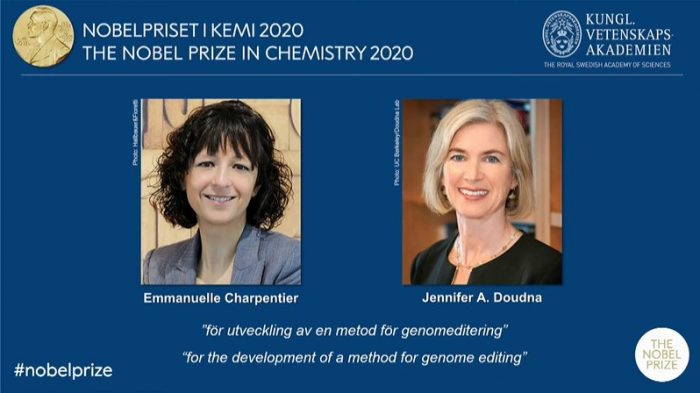
2020年10月7日のノーベル財団の発表によりますと、2020年のノーベル化学賞が、Jennifer A. Doudna(ジェニファー・ダウドナ)、 Emmanuel Charpentier(エマニュエル・シャルパンティエ)の両氏に与えられることになりました。
Announcement of the 2020 Nobel Prize in Chemistry Nobel Prize
祝☆ノーベル化学賞2020
ノーベル賞の枠は3人。CRISPR/Cas9の有用性は直ちに認識されて熾烈な特許戦争が勃発していたわけですが、Jennifer A. Doudna(ジェニファー・ダウドナ)、 Emmanuel Charpentier(エマニュエル・シャルパンティエ)の二人がノーベル賞3人枠の中に入ることは、誰の目にも明らかでした。ノーベル賞をもらって当然と言われてきましたが、それでも、実際に本当に授賞が決まるとこれほど嬉しいものなんだなあとこの映像を見ていて思いました。
First Day in a Nobel Life: Jennifer Doudna 2020/10/07 UC Berkeley
大阪大学微生物病研究所の研究グループが奇妙な繰り返し配列を大腸菌のゲノムで見つけ、石野 良純(いしの よしずみ)博士らが1987年に論文報告をしたのが、CRISPRが見出された最初の例です。この配列は、後の研究者によって、CRISPR、Clustered Regularly Interspaced Short Palindromic Repeatsと名付けられることになります。
Ishino Y, Shinagawa H, Makino K, Amemura M, Nakata A. (1987). Nucleotide sequence of the iap gene, responsible for alkaline phosphatase isozyme conversion in Escherichia coli, and identification of the gene product. J Bacteriol 169: 5429-5433. PDFリンク
FIG. 5. Comparison of direct-repeat sequences consisting of 61 base pairs in the 3′-end flanking region of iap. The 29 highly conserved nucleotides, which contain a dyad symmetry of 14 base pairs (underlined), are shown at the bottom. Homologous nucleotides found in at least two DNA segments are shown in boldface type. The second translational termination codon is boxed. The nucleotide numbers are in parentheses.
An unusual structure was found in the 3′-end flanking region of iap (Fig. 5). Five highly homologous sequences of 29 nucleotides were arranged as direct repeats with 32 nucleotides as spacing. The first sequence was included in the putative transcriptional termination site and had less homology than the others. Well-conserved nucleotide sequences containing a dyad symmetry, named REP sequences, have been found in E. coli and Salmonella typhimurium (28) and may act to stabilize mRNA (18). A dyad symmetry with 14 nucleotide pairs was also found in the middle of these sequences (underlining, Fig. 5), but no homology was found between these sequences and the REP sequence. So far, no sequence homologous to these has been found elsewhere in procaryotes, and the biological significance of these sequences is not known.
この論文では、「現在のところ、今回見つかった配列と相同性を示す配列は他の原核生物では見つかっていない。また、この配列の生物学的な意義は不明である(So far, no sequence homologous to these has been found elsewhere in procaryotes, and the biological significance of these sequences is not known)」と述べています。
Mojica, F.J.M., Dıez-Villasenor, C., Soria, E., and Juez, G. (2000). Biological significance of a family of regularly spaced repeats in the genomes of Archaea, Bacteria and mitochondria. Mol. Microbiol. 36, 244–246. HTMLリンク
The question emerges here as to whether the SRSRs have a common function in prokaryotes, or whether their presence is reminiscent of ancient sequences and their role diverged with evolution. The universality, phylogeny and biological significance of this peculiar family of repeats arises as an item to be elucidated. (Mojica eta l., 2000 結論のセクションより)
Identification of genes that are associated with DNA repeats in prokaryotes. Jansen R, Embden JD, Gaastra W, Schouls LM. Mol Microbiol. 2002 Mar;43(6):1565-75. PDF link
To appreciate their characteri-stic structure, we will refer to this family as the clustered regularly interspaced short palindromic repeats (CRISPR). In most species with two or more CRISPR loci, these loci were flanked on one side by a common leader sequence of 300-500 b. (中略)Four CRISPR-associated (cas) genes were identified in CRISPR-containing prokaryotes that were absent from CRISPR-negative prokaryotes. The cas genes were invariably located adjacent to a CRISPR locus, indicating that the cas genes and CRISPR loci have a functional relationship. The cas3 gene showed motifs characteristic for helicases of the superfamily 2, and the cas4 gene showed motifs of the RecB family of exonucleases, suggesting that these genes are involved in DNA metabolism or gene expression. (Jansen et al., Mol Microbiol. 2002 Mar;43(6):1565-75.の論文の要旨から一部抜粋)
The finding in this study that the CRISPR loci were strictly associated with a set of homologous genes, one of which has nucleic acid helicase motifs (the Cas3 homologues), one of which has exonuclease activity (the Cas4 homologues) and one of which has a high pI (the CasI homologues), as is often found for DNA-binding proteins, may be suggestive of a role for the Cas proteins in the genesis of CRISPR loci. (Jansen et al., Mol Microbiol. 2002 Mar;43(6):1565-75.の論文の議論のセクションから抜粋)
CRISPR elements in Yersinia pestis acquire new repeats by preferential uptake of bacteriophage DNA, and provide additional tools for evolutionary studies. C. Pourcel, G. Salvignol, G. Vergnaud. First Published Online: 01 March 2005, Microbiology 151: 653-663. HTML link
One possible explanation for that finding could be that CRISPRs are structures able to take up pieces of foreign DNA as part of a defence mechanism. In this view, it is tempting to further speculate that CRISPRs may represent a memory of past ‘genetic aggressions’. The fact that most of the spacers described in other bacteria have no homologue in the databases could still be explained by such a phage origin, as only a very small number of the existing bacteriophages have so far been sequenced. (Pourcel et al., Microbiology 151: 653-663. ディスカッションセクションより抜粋)
Clustered regularly interspaced short palindrome repeats (CRISPRs) have spacers of extrachromosomal origin. Bolotin A, Quinquis B, Sorokin A, Ehrlich SD. Microbiology. 2005 Aug;151(Pt 8):2551-61. HTML link
Here we report a correlation between the number of spacers in a locus and the resistance of S. thermophilus to phage infection, suggesting that CRISPRs can have a different biological role, protecting the bacteria against phage attack. (Bolotin et al., Microbiology 151(Pt 8):2551-61)
CRISPR provides acquired resistance against viruses in prokaryotes. Barrangou R, Fremaux C, Deveau H, Richards M, Boyaval P, Moineau S, Romero DA, Horvath P. Science 2007 Mar 23;315(5819):1709-12.
Clustered regularly interspaced short palindromic repeats (CRISPR) are a distinctive feature of the genomes of most Bacteria and Archaea and are thought to be involved in resistance to bacteriophages. We found that, after viral challenge, bacteria integrated new spacers derived from phage genomic sequences. Removal or addition of particular spacers modified the phage-resistance phenotype of the cell. Thus, CRISPR, together with associated cas genes, provided resistance against phages, and resistance specificity is determined by spacer-phage sequence similarity. (Barrangou et al., 2007 要旨)
Cas9–crRNA ribonucleoprotein complex mediates specific DNA cleavage for adaptive immunity in bacteria.Giedrius Gasiunas, Rodolphe Barrangou, Philippe Horvath, and Virginijus Siksnys. PNAS September 25, 2012 109 (39) E2579-E2586; https://doi.org/10.1073/pnas.1208507109
Here, we demonstrate that the Cas9–crRNA complex of the Streptococcus thermophilusCRISPR3/Cas system introduces in vitro a double-strand break at a specific site in DNA containing a sequence complementary to crRNA. DNA cleavage is executed by Cas9, which uses two distinct active sites, RuvC and HNH, to generate site-specific nicks on opposite DNA strands. Results demonstrate that the Cas9–crRNA complex functions as an RNA-guided endonuclease with RNA-directed target sequence recognition and protein-mediated DNA cleavage. (要旨より一部抜粋)
A programmable dual-RNA-guided DNA endonuclease in adaptive bacterial immunity.
Jinek M, Chylinski K, Fonfara I, Hauer M, Doudna JA, Charpentier E. Science. 2012 Aug 17;337(6096):816-21.
We propose an alternative methodology based on RNA-programmed Cas9 that could offer considerable potential for gene-targeting and genome-editing applications. (Jinek et al., 2012)
George Church博士やFeng Zhang博士の研究グループにより、CRISPR/Cas9システムが真核生物においても働くことが示され、ゲノム編集ツールとして人間を含めた全ての真核生物に応用する道が開かれました。
RNA-Guided Human Genome Engineering via Cas9. Prashant Mali, Luhan Yang, Kevin M. Esvelt, John Aach, Marc Guell, James E. DiCarlo, Julie E. Norville, George M. Church. Science 15 Feb 2013; Vol. 339, Issue 6121, pp. 823-826
The fully defined nature of this two-component system suggested that it might function in the cells of eukaryotic organisms such as yeast, plants, and even mammals. By cleaving genomic sequences targeted by RNA sequences (4–6), such a system could greatly enhance the ease of genome engineering. (Mali et al., 2013 のイントロダクションより。太字強調は当サイト)
Multiplex Genome Engineering Using CRISPR/Cas Systems. Le Cong, F. Ann Ran, David Cox, Shuailiang Lin, Robert Barretto, Naomi Habib, Patrick D. Hsu, Xuebing Wu, Wenyan Jiang, Luciano A. Marraffini, Feng Zhang.Science 15 Feb 2013:Vol. 339, Issue 6121, pp. 819-823
KS Community Lecture: Genome Editing Using CRISPR-Cas Systems
フェン・ジャン(Feng Zhang)博士による解説
Development and Applications of CRISPR-Cas9 for Genome Engineering. Patrick D.Hsu, Eric S.Lander, Feng Zhang. Cell Volume 157, Issue 6, 5 June 2014, Pages 1262-1278 HTML link
Zhang studied chemistry and physics at Harvard and graduated with the highest honors. He then headed to Stanford University for his doctoral work, where he joined the newly formed lab of Karl Deisseroth, who had just begun to develop optogenetics as a method for manipulating brain activity. Over the next five years, Zhang played a central role in making optogenetics a reality.
In 2009, after earning a PhD in chemistry, Zhang switched his focus to genome editing. That same year, he received a prestigious three-year Harvard Junior Fellowship, during which he worked in the laboratories of two Harvard Medical School professors, Paola Arlotta and George Church. There, he helped develop a new method of gene editing through the adaptation of TAL effectors (TALEs), sequence-specific DNA-binding proteins found in plant pathogens that alter gene expression in plants.
Biology and Applications of CRISPR Systems: Harnessing Nature’s Toolbox for Genome Engineering. Addison V.Wright, James K.Nuñez, Jennifer A.Doudna. Cell Volume 164, Issues 1–2, 14 January 2016, Pages 29-44. PDF link
Jennifer Doudna: CRISPR Basics (2017 CRISPR Workshop YOUTUBE動画 Innovative Genomics Institute – IGI 2017/11/04)
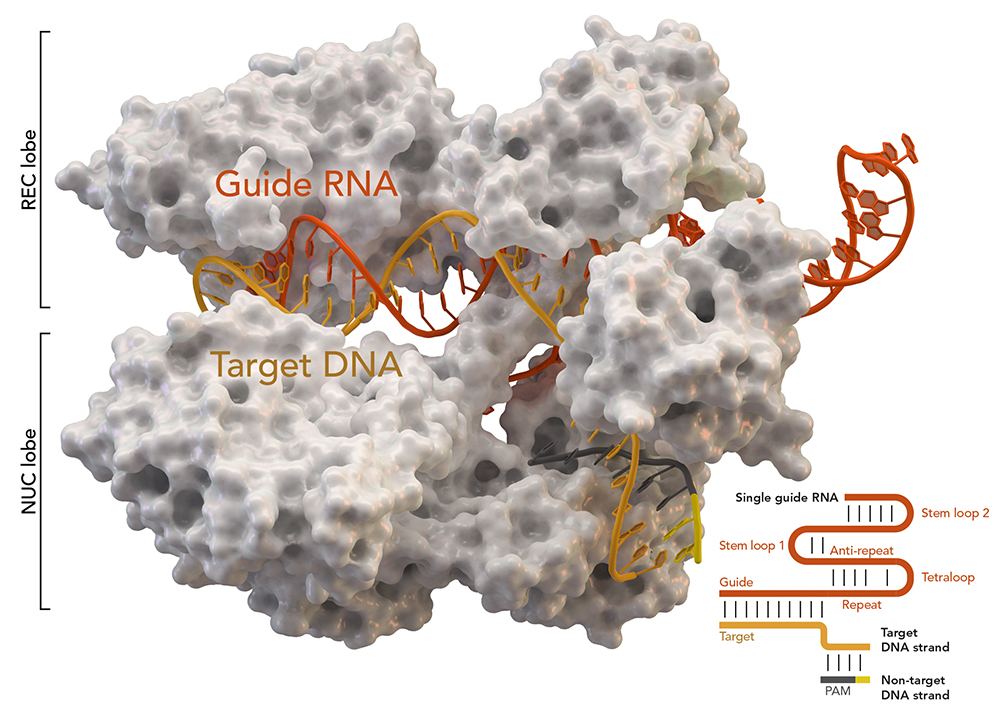
gRNA: guide RNA (sgRNA (single-strand guide RNA, single guide RNA, short guide RNA)とも表記) 自然界では複合体を形成して働くcrRNAとtracrRNAを、ゲノム編集ツールとして利用しやすいよう、人工的にひと続きのRNAにしたもの。
Cascade: CRISPR-Associated Complex for Antiviral Defense (Brouns et al., 2008 Science) タンパク質からなる巨大な複合体で内部にCRISPR配列のRNA転写物があり、これを使って感染によるウイルスDNAと適合するものがいないか監視している。(参考:PDBj)
Cas9: Cascade 9 (もしくはCRISPR associated protein 9)(参考: Roy et al., 2018 Front Genet.)2018 Cas9は、II型CRISPR系に分類される。監視タンパク質と切断を実行する部分の両方が1本のタンパク質鎖の中に収められている。(参考:PDBj) cas9 (formerly named “cas5” or “csn1”) is the signature gene for type II systems (8)(出典:Gasiunas et al., 2012;PNAS 109(39)E2579-E2586)
一般読者向けCRISPR解説記事
CRISPR Part 1: A Brief History of CRISPR (TWIST BIOSCIENCE Dec 12, 2017)
Annotation and Classification of CRISPR-Cas Systems. Kira S. Makarova and Eugene V. Koonin. Methods Mol Biol. 2015; 1311: 47–75. PDF link
Cpf1 Is a Single RNA-Guided Endonuclease of a Class 2 CRISPR-Cas System. BerndZetsche, Jonathan S.Gootenberg, Omar O.Abudayyeh, Ian M.Slaymaker, Kira S.Makarova, PatrickEssletzbichler, Sara E.Volz, JuliaJoung, Johnvan der Oost, AvivRegev, Eugene V.Koonin, Feng Zhang. Cell
Volume 163, Issue 3, 22 October 2015, Pages 759-771. Here, we report characterization of Cpf1, a putative class 2 CRISPR effector. We demonstrate that Cpf1 mediates robust DNA interference with features distinct from Cas9. Cpf1 is a single RNA-guided endonuclease lacking tracrRNA, and it utilizes a T-rich protospacer-adjacent motif. Moreover, Cpf1 cleaves DNA via a staggered DNA double-stranded break.
Expanding the catalog of cas genes with metagenomes. Quan Zhang, Thomas G. Doak, and Yuzhen Ye. Nucleic Acids Res. 2014 Feb; 42(4): 2448–2459.
Evolution and classification of the CRISPR–Cas systems. Makarova et al., 2011. Nature Reviews Microbiology volume 9, pages 467–477(無料Abstract)
CRISPR/Cascade 9-Mediated Genome Editing-Challenges and Opportunities. Bhaskar Roy, Jing Zhao, Chao Yang, Wen Luo, Teng Xiong, Yong Li, Xiaodong Fang, Guanjun Gao, Chabungbam O. Singh, Lise Madsen, Yong Zhou, and Karsten Kristiansen. Front Genet. 2018; 9: 240.
Genome editing: A breakthrough in life science and medicine. Izuho Hatada and Takuro Horii. Endocrine Journal 63(2):105-110. (2016) PDFリンク
総説 ゲノムから見た最近の進化ーCRISPによる生存戦略ー 中川一路 Dental Medicine Research 33(3):236-241. (2013). PDFリンク
原著論文
数が多いため主要な論文のみ挙げています。
CRISPRの発見
Nucleotide sequence of the iap gene, responsible for alkaline phosphatase isozyme conversion in Escherichia coli, and identification of the gene product. Ishino Y, Shinagawa H, Makino K, Amemura M, Nakata A. (1987). J Bacteriol 169: 5429-5433. PDFリンク
Unusual Nucleotide Arrangement with Repeated Sequences in the Escherichia coli K-12 Chromosome. ATSUO NAKATA,* MITSUKO AMEMURA, AND KOZO MAKINO. Department of Experimental Chemotherapy, Research Institute for Microbial Diseases, Osaka University, 3-1, Yamadaoka, Suita, Osaka, Japan 565. Received 19 December 1988/Accepted 13 March 1989 JOURNAL OF BACTERIOLOGY, June 1989, Vol. 171, No. 6 p. 3553-3556 PDF link
Long stretches of short tandem repeats are present in the largest replicons of the Archaea Haloferax mediterranei and Haloferax volcanii and could be involved in replicon partitioning. F.J.M. Mojica C. Ferrer G. Juez F. Rodríguez‐Valera. molecular microbiology July 1995;17(1):85-93
Biological significance of a family of regularly spaced repeats in the genomes of Archaea, Bacteria and mitochondria. Mojica, F.J.M., Dıez-Villasenor, C., Soria, E., and Juez, G. (2000). Mol. Microbiol. 36, 244–246. PDFリンク
Casの発見
Identification of genes that are associated with DNA repeats in prokaryotes. Jansen R, Embden JD, Gaastra W, Schouls LM. Mol Microbiol. 2002 Mar;43(6):1565-75. PDF link
CRISPRが働くメカニズム と生物学的な意義(細菌に備わる防御機構)
CRISPR provides acquired resistance against viruses in prokaryotes. Barrangou R, Fremaux C, Deveau H, Richards M, Boyaval P, Moineau S, Romero DA, Horvath P. Science 2007 Mar 23;315(5819):1709-12.
Cas9–crRNA ribonucleoprotein complex mediates specific DNA cleavage for adaptive immunity in bacteria.Giedrius Gasiunas, Rodolphe Barrangou, Philippe Horvath, and Virginijus Siksnys. PNASSeptember 25, 2012; 109 (39) E2579-E2586
ゲノム編集技術としてのCRISPR
A programmable dual-RNA-guided DNA endonuclease in adaptive bacterial immunity. Jinek M, Chylinski K, Fonfara I, Hauer M, Doudna JA, Charpentier E. Science 2012 Aug 17;337(6096):816-21.
Multiplex Genome Engineering Using CRISPR/Cas Systems. Le Cong, F. Ann Ran, David Cox, Shuailiang Lin, Robert Barretto, Naomi Habib, Patrick D. Hsu, Xuebing Wu, Wenyan Jiang, Luciano A. Marraffini, Feng Zhang.Science 15 Feb 2013; Vol. 339, Issue 6121, pp. 819-823
CRISPRに関する最近の論文
C2c2 is a single-component programmable RNA-guided RNA-targeting CRISPR effector.
Omar O. Abudayyeh, Jonathan S. Gootenberg, Silvana Konermann, Julia Joung, Ian M. Slaymaker, David B.T. Cox, Sergey Shmakov, Kira S. Makarova, Ekaterina Semenova, Leonid Minakhin, Konstantin Severinov, Aviv Regev, Eric S. Lander, Eugene V. Koonin, Feng Zhang. Science 02 Jun 2016.
Direct CRISPR spacer acquisition from RNA by a natural reverse transcriptase–Cas1 fusion protein. Sukrit Silas, Georg Mohr, David J. Sidote, Laura M. Markham, Antonio Sanchez-Amat, Devaki Bhaya, Alan M. Lambowitz, Andrew Z. Fire. Science 26 Feb 2016;Vol. 351, Issue 6276
その他のCRISPR-CASに関する論文
Protospacer adjacent motif (PAM)-distal sequences engage CRISPR Cas9 DNA target cleavage.
Cencic R, Miura H, Malina A, Robert F, Ethier S, Schmeing TM, Dostie J, Pelletier J. PLoS One. 2014 Oct 2;9(10):e109213.
参考
Genome damage from CRISPR/Cas9 gene editing higher than thought July 16, 2018, phys.org
We describe an isothermal, single-reaction method for assembling multiple overlapping DNA molecules by the concerted action of a 5′ exonuclease, a DNA polymerase and a DNA ligase. First we recessed DNA fragments, yielding single-stranded DNA overhangs that specifically annealed, and then covalently joined them. This assembly method can be used to seamlessly construct synthetic and natural genes, genetic pathways and entire genomes, and could be a useful molecular engineering tool. (Gibson et al., Enzymatic assembly of DNA molecules up to several hundred kilobases. Nature Methods volume 6, pages 343–345 (2009) doi:10.1038/nmeth.1318)
Daniel G Gibson, Lei Young, Ray-Yuan Chuang, J Craig Venter, Clyde A Hutchison III & Hamilton O Smith. Enzymatic assembly of DNA molecules up to several hundred kilobases.Nature Methods volume 6, pages 343–345 (2009) doi:10.1038/nmeth.1318
I’m having a lot of troubles with this reaction. Supposedly, it’s pretty quick and easy… but I’ve been working in this construction for months. (Asked 5 years ago
Gabriela Chavez-Calvillo, ResearchGate)
I recently Gibsoned a 9kb insert into a 5kb vector at a 1:1 molar ratio.(Christopher Duran, Colorado State University, 5 years ago ResearchGate)
NEW ENGLAND BioLabs (NEB) 製品情報 NEBuilder HiFi DNA アッセンブリー 製品名:NEBuilder HiFi DNA Assembly Master Mix, 製品番号:E2621S, 容量:10 reactions, 希望小売価格:¥18,000
Gibson Assembly® Cloning Kit: Have you tried NEBuilder HiFi DNA Assembly? NEBuilder HiFi offers several advantages over NEB Gibson Assembly. For more information, visit NEBuilderHiFi.com.
an In-Fusion™ enzyme reaction can join any two pieces of DNA that have 15 bp of identity at their ends. … The In-Fusion mechanism is ligation-independent and while proprietary, likely uses the unique properties of the 3′–5′ exonuclease activity of poxvirus DNA polymerase. When incubated with linear duplex DNAs with homologous ends in the presence of Mg2+ and low concentrations of dNTP, the 3′–5′ proofreading activity of poxvirus DNA polymerase progressively removes nucleotides from the 3′ end. This exposes complementary regions on substrate DNAs that can then spontaneously anneal through base pairing, resulting in joined molecules containing a hybrid region flanked by nicks, 1–5 nucleotide gaps, or short overhangs. The annealed structures are metastable because the poxvirus DNA polymerase has a lower affinity for nicked or gapped DNA ends than for duplex ends. Introduction into Escherichia coli repairs any single-stranded gaps. (Zhu et al., BioTechniques, Vol. 43, No. 3, September 2007, pp. 354–359)
we developed a new restriction site independent cloning method that does not leave any unwanted sequences at the junction sites (seamless) and is based on in vitro recombination between short regions of homologies (15–52 bp) in bacterial cell extracts termed SLiCE (Seamless Ligation Cloning Extract). (Zhang, Werling and Edelmann. Nucleic Acids Res. 2012 Apr; 40(8): e55. Published online 2012 Jan 11. doi: 10.1093/nar/gkr1288)
SLiCE from Escherichia coli laboratory strains(本橋研究室):seamless cloningに関連する試薬は、Gibson assembly kitやIn-Fusion kitなどの名称で様々なメーカーから商品化されていますが、その多くが高価で、資金の乏しい研究室では購入を躊躇しているかもしれません。そのような方に、ぜひ試していただきたいのがこのSLiCE法です。
Homologous DNA ends are efficiently fused together and produce vector clones with great accuracy. (Cold Fusion Cloning Kit with Competent Cells. How It Works. SBI System Biosciences))
1) gibson leaves no nick on the product, while infusion does.
2) gibson is more robust, it tolerate 3´- & 5´-end mismatch, while infusion doesn’t. … most false positive colonies i got when using gibson were actually caused by primer dimer or unspecific pcr products (they have the same overlap ends as the designed products)
3) there is ligase in gibson. so if you use only one restriction enzyme to linearize your plasmid backbone and use it in the assembly. The ligase may repair the backbone back to empty plasmid.
(Xinglin Jiang, Technical University of Denmark. What‘s the differences between the gibson assembly(NEB) and in-fusion clone(clontech)? ResearchGate)
A major limitation to SLIC/Gibson/CPEC/SLiCE assembly is that the termini of the DNA sequence fragments to be assembled should not have stable single stranded DNA secondary structure, such as a hairpin or a stem loop (as might be anticipated to occur within a terminator sequence), as this would directly compete with the required single-stranded annealing/priming of neighboring assembly fragments. (The SLIC, Gibson, CPEC and SLiCE assembly methods (and GeneArt® Seamless, In-Fusion® Cloning. j5.jbei.org)
Over the past decade, scientists have developed and fine tuned many different ways to clone DNA fragments which have provided appealing alternatives to restriction enzyme cloning. These newer technologies have become more and more common, and for good reason. They offer many advantages over the traditional restriction enzyme cloning we once relied exclusively on. (Addgene’s Blog. Posted by Brook Pyhtila on Mar 1, 2016 太字強調当サイト)
It’s been more than four decades since researchers launched the molecular-biology revolution with the invention of DNA cloning. In that time, the tools of the trade have changed relatively little, and for many researchers, DNA cloning still means restriction enzyme digestion and DNA ligation. … Today, thanks largely to the needs and creativity of the synthetic-biology community, alternative, “seamless” cloning strategies have been developed. Here are some of the more popular options. (Say Goodbye to Genetic Scars with These Seamless Cloning Kits
Posted: May 29, 2014 Jeffrey M. Perkel 太字強調は当サイト)
参考
Gap-Repair Cloning:GRCがinvitrogenからkit化されて発売されています。GeneArt?® Seamless Cloning & Assemblyという名前です。酵母のコンピテントセルやトランスフォーメーション試薬、大腸菌のコンピテントセル等もすべて含まれたキットです HM’s Home page
相同組換え方法およびクローニング方法並びにキット Inventor 正治 磯部 信幸 黒澤 Original Assignee 国立大学法人富山大学 Priority date 2008-03-07
Homologous recombination-based DNA cloning compositions. US8501454B2 Inventor:Weiqiang Liu, Ping Yang, Tao Wang, Zhuying Wang, Wenzhu Chen, Fang Liang Zhang, Original Assignee:Nanjingjinsirui Science and Tech Biology Corp, Priority date 2008-09-10
Cloning Without Restriction (TheScientist September 12, 2005) Key to Invitrogen’s Gateway technology is the “entry clone,” which contains a fragment of interest in a recombinase-ready plasmid. Researchers can quickly and efficiently move between expression systems without subcloning by swapping the insert from vector to vector.